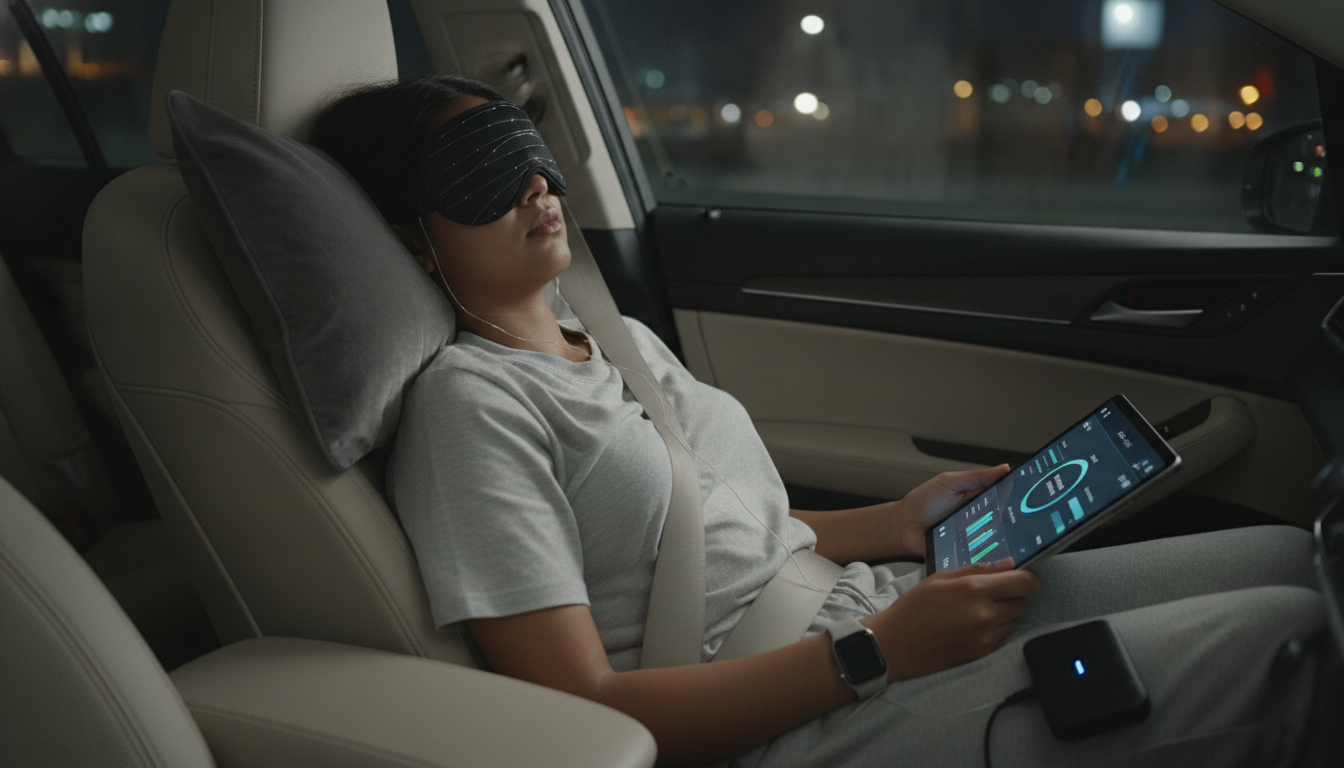
Sleep tracker AI works by turning raw body signals into sleep and wake insights. Most trackers collect sensor data all night, then an on-device or cloud model classifies your state (awake, light sleep, deep sleep, REM) and summarizes patterns like sleep duration, interruptions, and consistency.
For a deeper walkthrough of sensors, stages, and what the numbers mean, see the full guide here: https://vividhitspot.shop/how-does-sleep-tracker-ai-work/.
Wearables commonly use an accelerometer to detect movement and a heart-rate sensor (often PPG light) to estimate beats per minute and heart-rate variability. Some devices add skin temperature, blood oxygen (SpO2), breathing estimates, or microphone-based snore detection. None of these sensors “reads” sleep directly; they measure signals that change reliably with sleep depth and arousal.
AI models perform best on consistent inputs, so trackers first filter noise (like motion artifacts), align timestamps, and break the night into short windows (often 30–60 seconds). Features are then computed—examples include movement intensity, pulse patterns, variability metrics, and respiratory trends.
Using those features, a trained model estimates the most likely sleep stage per window and smooths results so they follow realistic transitions. Many systems also look for events such as awakenings, restlessness, irregular breathing signatures, or unusually low oxygen readings, depending on the hardware and regulatory constraints.
Because “normal” differs by person, many trackers adapt using your history: typical bedtime, resting heart rate, and how your signals look during confirmed sleep. This can reduce misclassification from factors like late workouts, alcohol, stress, or sleeping position changes.
Finally, AI converts stage estimates into summaries: total sleep, time in each stage, sleep efficiency, and consistency. Some apps translate this into coaching, like optimizing bedtime, recovery readiness, or wind-down reminders.
Consumer trackers can estimate sleep duration reasonably well for many people, but sleep stages are less precise than clinical polysomnography. Accuracy varies by device, sensor quality, and individual factors like movement, skin tone, and health conditions.









Leave a comment