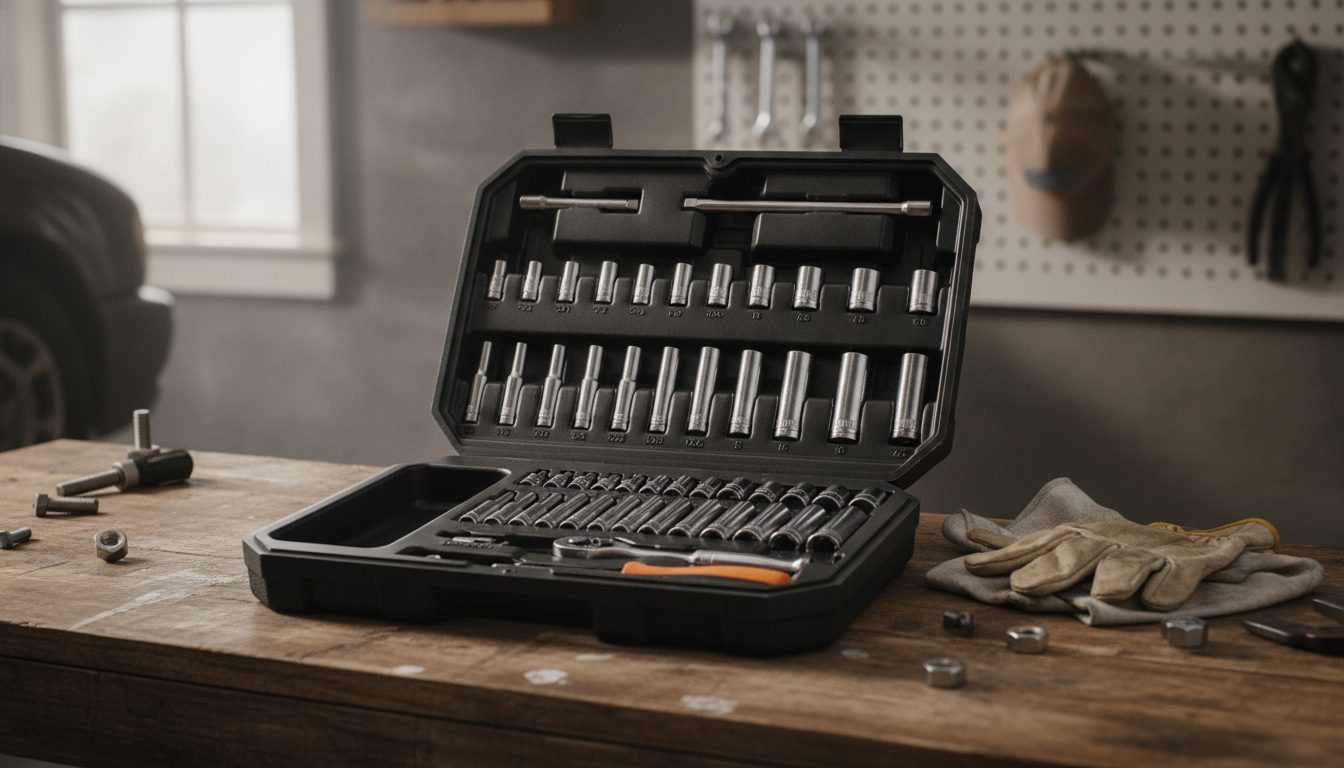
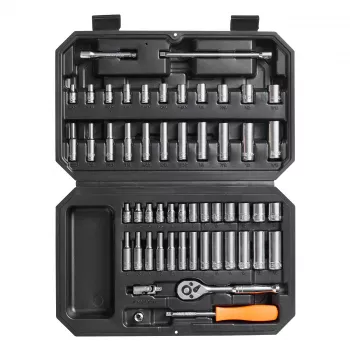
A compact socket set that covers both SAE and metric fasteners can handle most common jobs—vehicle trim and battery work, bike adjustments, furniture assembly, and general household repairs. This 54-piece kit pairs a ratchet with a range of sockets and a fitted storage case, keeping sizes organized and easy to grab when a quick fix turns into a longer project.
Having both inch (SAE) and millimeter (metric) sockets in one case helps you move from task to task without stopping to hunt for a different kit. This style of set is especially useful for:
If you’re building a “do-most-things” toolkit, a balanced socket assortment plus a ratchet is one of the most practical foundations.
This kit focuses on the sizes used most often for day-to-day fastening, and keeps them in a dedicated storage case so you can spot the right socket quickly and notice missing pieces sooner.
| Item | Included | Why it matters |
|---|---|---|
| SAE sockets | Yes | Fits inch-based fasteners often found on older equipment and some household hardware |
| Metric sockets | Yes | Covers the most common standard on modern vehicles, bikes, and appliances |
| Ratchet | Yes | Speeds up repetitive turns and improves control in cramped areas |
| Storage case | Yes | Keeps sizes separated, protects pieces during transport, and supports quick inventory checks |
| Total pieces | 54 | Balanced size for portability while still offering broad coverage |
Rounding a bolt head is one of the fastest ways to turn a simple job into a headache. A few habits help prevent slip, especially when you’re working quickly.
For general guidance on tool expectations and common terminology, hand tool standards like ASME B107 provide helpful context for how tools are categorized and evaluated.
A socket set’s usefulness drops fast if pieces wander off into drawers, door pockets, or the back seat. A fitted case keeps the kit dependable over time.
If the set lives in a vehicle, consider stashing it somewhere it won’t slide around, and keep it away from persistent moisture (like wet floor mats). Simple storage choices do a lot to preserve crisp socket edges.
A set like this is built for frequent, moderate-duty tasks—tightening, loosening, and rechecking fasteners as things settle, vibrate, or get adjusted.
When working around moving parts, pinch points, or energized systems, basic tool safety matters as much as having the right size socket. OSHA’s overview on hand and power tool safety is a solid refresher for everyday precautions.
A little maintenance keeps sockets fitting cleanly and the ratchet working smoothly.
Many households and mixed equipment use both standards, especially when you’re working across vehicles, bikes, and furniture from different brands and eras. Having both reduces work stoppages and helps avoid using near-match sizes that can round fasteners.
Check the size markings, keep sockets returned to their labeled spots in the case, and test-fit for a snug, no-wobble engagement before applying force. If it rocks or feels loose, switch sizes rather than “making it work.”
Yes—its portability makes it convenient for light roadside or travel fixes, especially when you want one small case instead of a full toolbox. Keep it dry, secured so it won’t slide, and treat it as a light-duty helper rather than a substitute for major repair tools.










Leave a comment