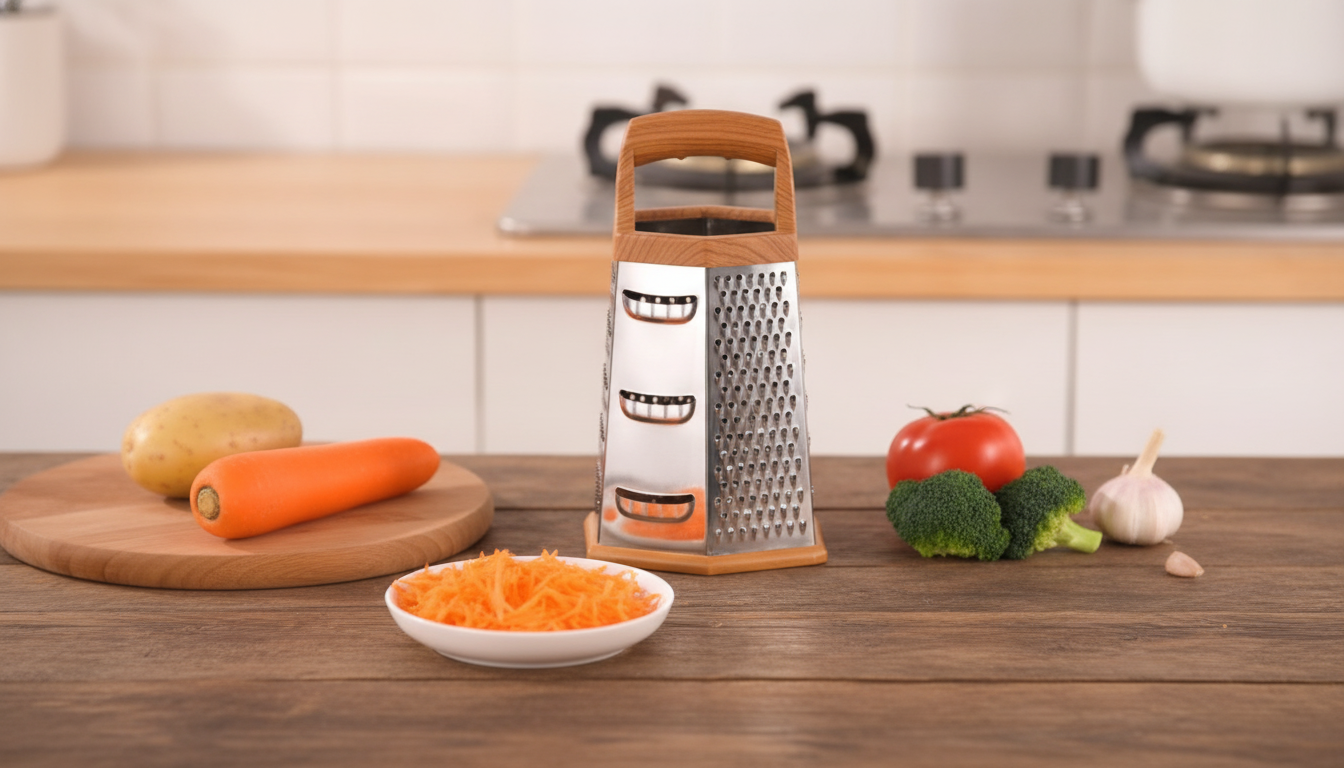
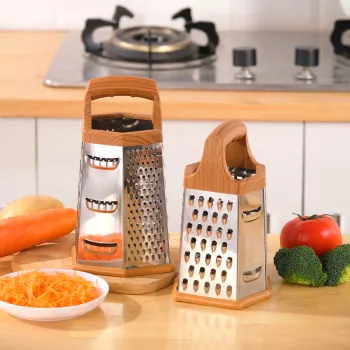
A good grater earns its spot on the counter because it keeps prep moving: zest for citrus, fluffy Parmesan for pasta, and sturdy shreds for slaws or hash browns—all without rummaging for extra tools. The Stainless Steel Multi-Sided Vegetable Grater with Wood-Style Handle pairs multiple grating surfaces in one compact box-style design, then finishes it with a wood-style grip that feels steadier in the hand when you’re working through bigger batches.
Multi-sided (box) graters are the kitchen equivalent of a multi-tool—simple, dependable, and ready for whatever the recipe throws at you. Instead of switching between a zester, shredder, and slicer, you rotate the grater to the side you need and keep going.
When the right texture lands in the bowl the first time, recipes come together faster. Fine zest disperses evenly through dressings and baked goods; medium shreds melt cleanly; coarse shreds hold structure in fritters and latkes; and thin slices help with quick gratins and garnishes.
This grater’s practicality comes from two things: a durable stainless steel body that’s meant for repeated use, and a wood-style handle that improves control. When you’re grating firmer foods like carrots or potatoes, a comfortable grip matters—it reduces slipping and helps keep pressure consistent.
| Grating surface | Best for | Result |
|---|---|---|
| Fine grater | Citrus zest, garlic, ginger, hard cheese | Fluffy or powdery texture |
| Medium grater | Cheddar, carrots, zucchini | Everyday shreds |
| Coarse grater | Potatoes, cabbage, softer cheeses | Thicker shreds for hash browns and slaws |
| Slicer/razor side | Cucumber, potato, firm cheese | Thin slices (use with care) |
A box grater is straightforward, but a few habits make it faster, cleaner, and safer. The goal is a stable setup and controlled strokes—especially as the food gets smaller near the end.
For wet vegetables (zucchini, potatoes), grating directly onto a towel-lined plate or into a bowl makes it easier to manage moisture, especially if you plan to squeeze out liquid for fritters or pancakes.
Sharp grating teeth work best when they’re kept clear, dry, and free of stuck-on starches. Quick cleanup also helps reduce food residue in the tiny openings and makes the next use feel “like new.” For broader food-safety guidance, it’s worth following the recommendations from USDA FSIS on keeping kitchens clean and the FDA’s consumer food safety resources.
If something does dry onto the surface, a short soak in warm soapy water usually loosens residue. Then brush gently until the teeth are clear again.
This style of grater is best for cooks who want dependable results across multiple recipes without packing the drawer with single-purpose gadgets.
| Detail | Value |
|---|---|
| Material | Stainless steel grating surfaces |
| Handle | Wood-style grip |
| Form | Multi-sided box grater |
| Use cases | Cheese, vegetables, zest, slicing |
| Product page | View product |
Yes. Use the fine side for hard cheese and zest, then switch to the medium or coarse side for vegetables like carrots, zucchini, and potatoes, adjusting pressure based on how soft the food is.
Rinse the grater soon after use and grate with steady, light pressure. For soft cheese, chilling it briefly can reduce smearing, and tapping or brushing the back side helps release clumps.
If dishwasher safety isn’t specified, hand-washing is the safer choice to help preserve sharpness and reduce wear around the handle. Rinse promptly, wash with a brush, and dry fully after cleaning.










Leave a comment