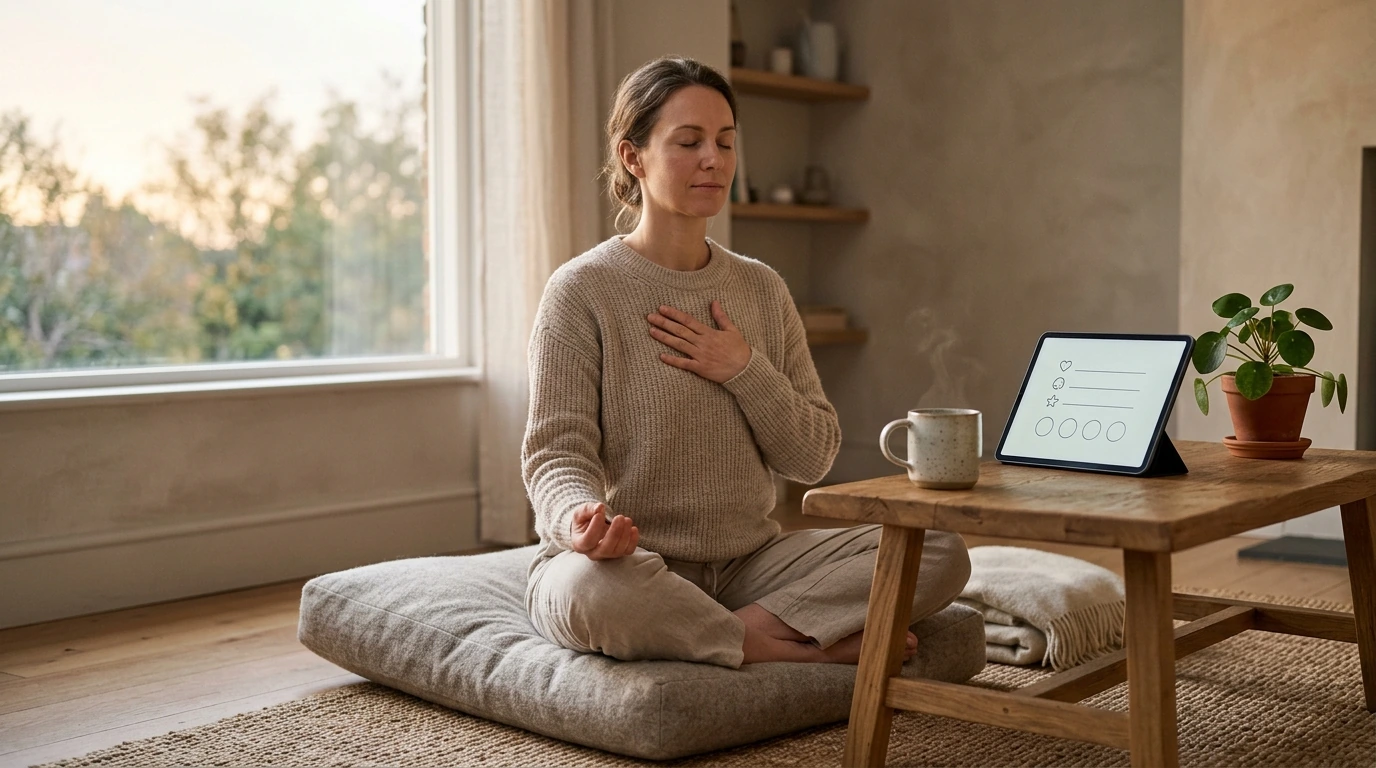
Guided meditation “sparks” are short starting points—images, sensations, questions, or mini-scripts—that make it easier to settle the mind without overthinking what to do next. Pairing those sparks with an AI assistant can help personalize pacing, tone, and themes for the day, while a digital checklist keeps the practice consistent and low-friction. Below is a practical set of sparks, a repeatable routine, and a checklist-style way to track what helps most.
A meditation spark is a small, focused cue that guides attention: a single sentence, a sensory anchor, or a gentle question. It works because it replaces “What should I meditate on?” with one clear direction—reducing decision fatigue and making it easier to start.
Short cues also support consistency. Even 3–10 minutes can help reinforce calm attention and emotional regulation over time. The best part is how flexible sparks are: rotate them by need—stress relief, sleep, focus, self-compassion, or a quick reset after a tough moment.
For a simple way to keep track of what you used and how it felt afterward, consider using a lightweight tracker like 10 Guided Meditation Sparks You Can Try with AI | Digital Checklist for Relaxation and Mindfulness.
Pick one spark, then ask for a brief guided script in your preferred style (gentle, neutral, spiritual, or clinical) and a time length (3, 5, 10, or 15 minutes). If you want the session to feel more supportive and less “talky,” request pacing cues like pauses, breath counts, and reminders to soften the jaw and shoulders.
Personalize safely by specifying what to avoid (for example: no trauma content, no enclosed-space imagery, or no references to a specific memory). You can also ask for grounding language that keeps you connected to the room and your body. For the most consistent results, reuse a few favorite sparks for a week and compare your calm, sleep, and focus ratings.
| Step | What to do | Time |
|---|---|---|
| Settle | Sit or lie down, silence notifications, choose a single spark | 30–60 sec |
| Tune the breath | Inhale through the nose, exhale slowly; relax the face and shoulders | 1–2 min |
| Run the guidance | Follow the AI script; return gently when the mind wanders | 3–12 min |
| Close | Name one sensation and one emotion; open the eyes slowly | 30–60 sec |
| Track | Check off the spark used and rate calm/focus from 1–5 | 30 sec |
Pick a consistent location—one chair, a cushion corner, or a bedside spot—so your brain starts associating that place with downshifting. Add one visual anchor that feels quiet and non-distracting (something simple and natural tends to work well), such as the Ice Crack Gradient Ceramic Planter.
Soft textures can also help your body settle, especially during breath and body scan practices. If you like having a comfort object nearby for evening sessions, the Ultra-Soft 14″ Kawaii Bunny Plush with Long Ears can be an easy cue for winding down without adding noise or screens.
Meditation can support well-being, but it isn’t a substitute for mental health care. Persistent distress, panic, or trauma responses deserve professional support. For an overview of effectiveness and safety considerations, see NCCIH: Meditation and Mindfulness—Effectiveness and Safety and the American Psychological Association: Mindfulness meditation.
Many people notice a shift with 3–15 minutes, especially when practiced most days of the week. Use a simple 1–5 calm/focus rating after each session to find your personal sweet spot and stick with that length for a week.
Switch to simpler sparks like breath counting or five-sense grounding, and shorten the session to 2–5 minutes. Keeping eyes open and returning to one neutral external anchor (a sound, the feeling of feet on the floor) can also help.
It can be helpful for structure, pacing, and personalization, as long as you avoid triggering themes and request grounding, present-moment language. If you experience intense anxiety, panic, or trauma-related symptoms, it’s important to seek support from a qualified professional.










Leave a comment