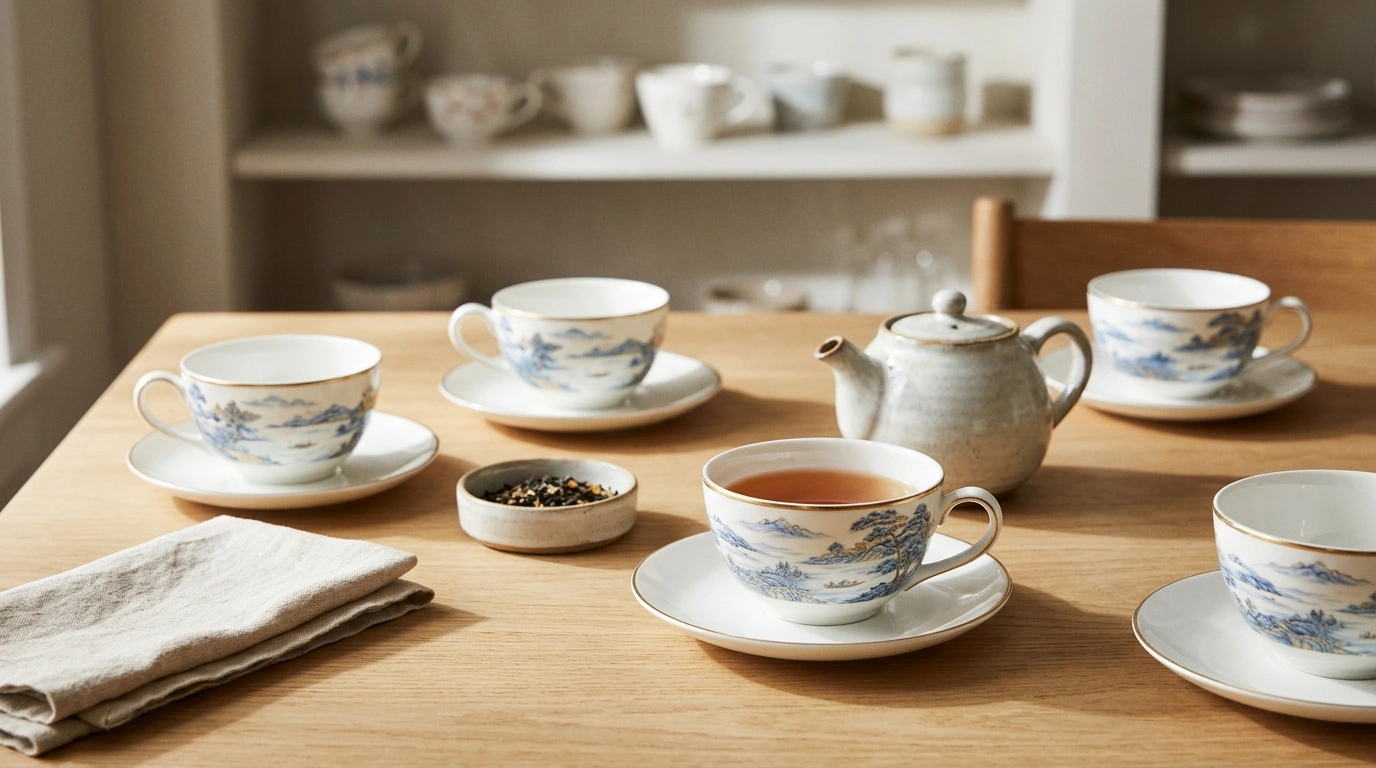
Scenic porcelain tea cups bring a quiet, gallery-like feel to everyday tea—fine enough for hosting, practical enough for a nightly wind-down. The best pieces combine high-fired porcelain with artwork that stays crisp at the rim and around the curve of the bowl, so the scene looks as good in hand as it does on display. Below are the details that matter most when choosing scenic-pattern porcelain, plus easy ways to style, serve, and care for your cups so they stay bright for years. For more guidance, see What’s in Our Collection? – Chinese Export Porcelain.
For a classic, giftable option, explore Porcelain Tea Cups with Scenic Pattern—a decorative set that looks polished on open shelving and elegant on the table. For further reading, see Defining Cups and Saucers.
Use this snapshot to decide whether scenic porcelain is the right match for daily tea, entertaining, or collecting. Consider heat retention, durability, and how each material affects presentation.
| Material | Look & style | Heat & sipping experience | Best for |
|---|---|---|---|
| Porcelain | Crisp, refined; patterns appear sharp | Smooth rim; moderate heat retention | Scenic designs, hosting, everyday elegance |
| Bone china | Very bright white; luminous | Often thinner; can feel lighter | Formal tea settings and delicate presentation |
| Stoneware | Heavier, rustic; earthy glazes | Good heat retention; thicker lip | Casual tea, cozy mugs, durable daily use |
| Glass | Transparent; shows infusion color | Can feel hotter; varies by thickness | Blooming teas, visual steeping |
Porcelain’s long tradition—and the technical craft behind it—helps explain why scenic patterns look so clean on the surface. For background reading, see Encyclopaedia Britannica’s overview of porcelain and Smithsonian Magazine’s history of porcelain.
If you enjoy a more curated tea moment, scenic cups also make a simple “set” feel intentional: a neat stack of saucers, matching teaspoons, and a small plate for lemon or cookies.
For a subtle décor tie-in, a cool-toned ceramic accent on the same shelf can echo the cup’s glaze. A complementary piece like the Ice Crack Gradient Ceramic Planter can add texture without competing with the cup artwork.
For peace of mind when buying any foodware, it’s also helpful to review general safety guidance, such as the U.S. Food & Drug Administration’s information on lead in foodware, and follow any care notes provided on the product page.
Yes—porcelain is made for hot beverages and handles typical tea temperatures well. To reduce the risk of cracking, avoid sudden temperature changes (like boiling water into a chilled cup) and follow any care notes listed on the product page.
Use gentle methods: soak the cup in warm water with mild dish soap, or apply a light baking soda paste and wipe with a soft sponge. Avoid harsh abrasives or strong chemicals, then rinse thoroughly and dry.
High-quality glaze and proper care help scenic patterns stay crisp. Fading risk increases with abrasive scrubbing, frequent dishwasher cycles, and harsh detergents, so gentler washing habits typically preserve the artwork longer.









Leave a comment