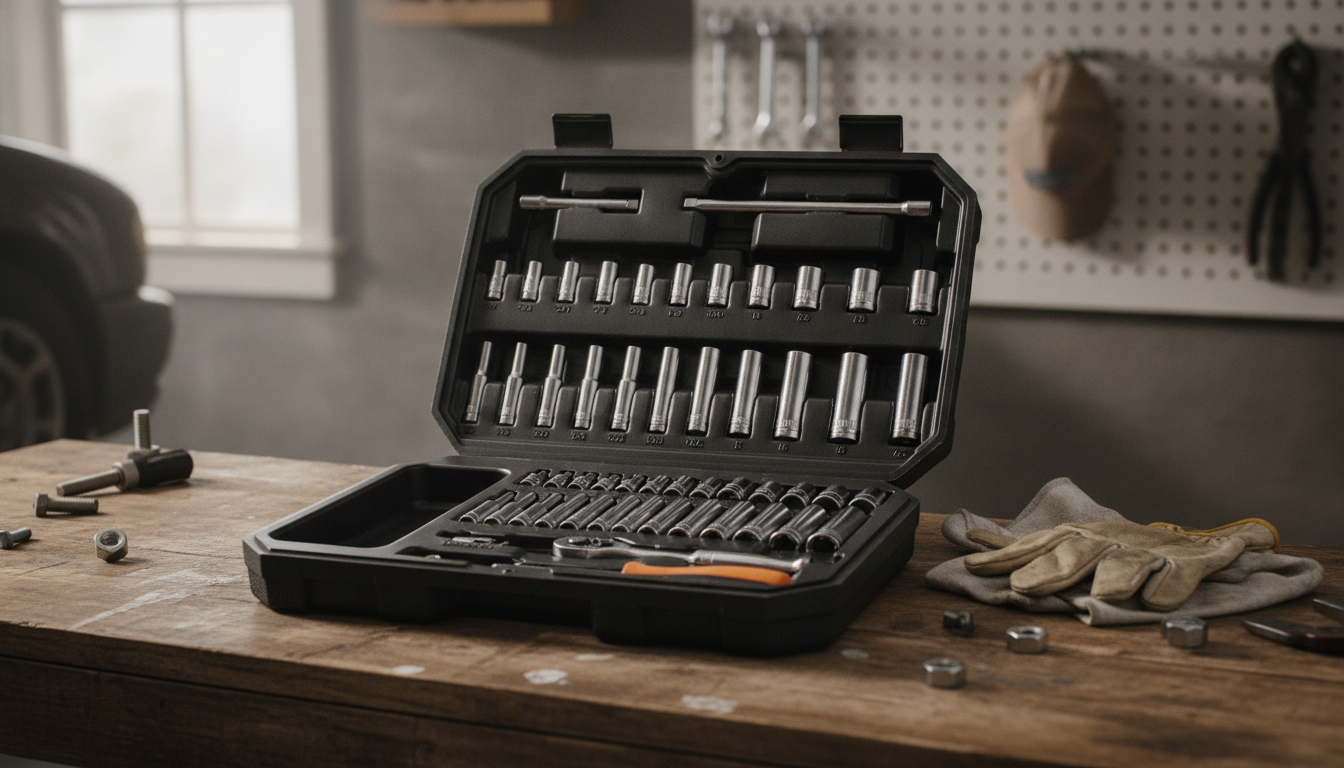
The right ratchet and socket set depends on what you’ll be working on most often, the fastener sizes you’ll encounter, and how portable you need the kit to be. Start by thinking about the jobs you actually do—car repairs, bike maintenance, furniture assembly, small engines, or general household fixes—because that determines the sizes and drive types that matter.
If you work on most modern cars, motorcycles, and many appliances, metric sizes are common. Older American vehicles, some lawn equipment, and certain home hardware may use SAE (inch) sizes. If you don’t want to guess, a mixed SAE/metric set is usually the safest choice for everyday use.
For light-duty work in tight spaces, 1/4-inch drive is handy. For the widest range of DIY tasks, 3/8-inch drive is the go-to because it balances strength and access. For large, stubborn fasteners (suspension, lug nuts), 1/2-inch drive offers more leverage—often as a second set rather than the only one.
Deep sockets help when a bolt sticks out past the nut; shallow sockets are more compact and often fit better in cramped areas. For point style, 6-point sockets grip flats better and are less likely to round stuck fasteners, while 12-point sockets can be quicker to position in limited swing angles.
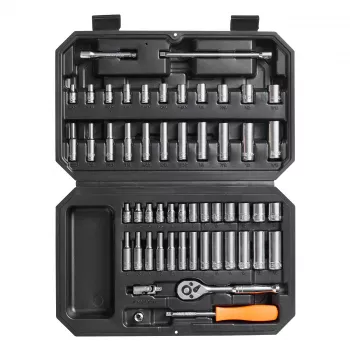
A useful kit usually includes a smooth ratchet, common extension lengths, and an adapter or two for flexibility. A labeled storage case matters more than it sounds—it keeps sizes organized so you can grab the right socket fast.
For a concrete example of a versatile, mixed-size option, see this guide to a 54-piece SAE/metric socket set with a ratchet and storage case: https://vividhitspot.shop/guide-54-piece-sae-metric-socket-set-ratchet-storage-case/.
6-point sockets contact the flat sides of a fastener and are less likely to slip or round corners, especially on tight bolts. 12-point sockets are easier to seat in more positions, which can help in tight spaces.










Leave a comment