
A pannier and a trunk bag are both bike cargo bags, but they sit in different places and carry weight differently. A pannier hangs on the side of a rear rack (or sometimes a front rack), while a trunk bag sits on top of the rear rack like a small suitcase.
Panniers clip or strap to the rack’s side rails and typically ride lower than a top bag. That lower center of gravity can feel more stable when carrying heavier items like groceries, work gear, or camping supplies. Many panniers come as singles or pairs, and a pair can balance weight across both sides of the bike.
Trade-offs: panniers are wider overall, which can matter in tight spaces, and they can be a little slower to remove and reattach unless they use a quick-release hook system. Some models also need careful adjustment to prevent heel strike (your foot brushing the bag while pedaling).
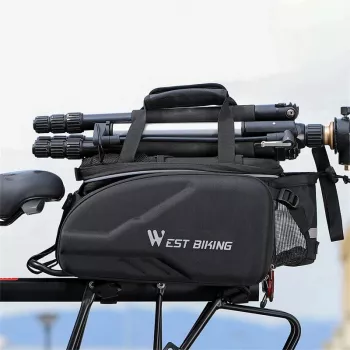
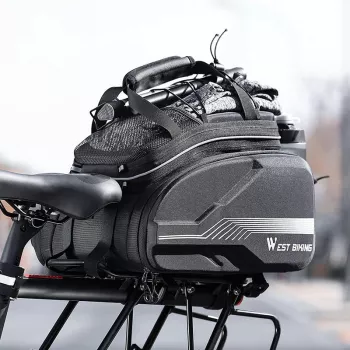
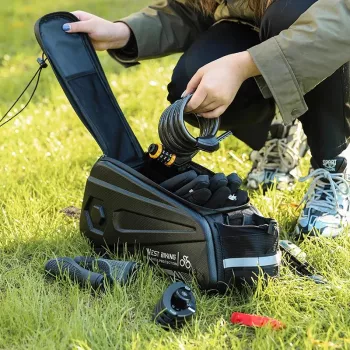
A trunk bag mounts on the rack platform, often with Velcro straps or a dedicated slide-on system. Because it sits above the wheel, it’s easy to access at stops—ideal for items like a jacket, snacks, tools, and a small lock. Trunk bags tend to be narrower than panniers, helping keep the bike’s profile slim.
Trade-offs: since the load sits higher, very heavy cargo can make handling feel a bit top-heavy. Capacity is usually smaller than a full pannier setup, though expandable trunk bags can bridge the gap.
Pick panniers for larger or heavier hauling and better left-right load balance. Choose a trunk bag for quick access and lighter everyday carry. If you want flexibility, a convertible option can give you the best of both—learn more in the main guide: expandable waterproof trunk pannier bag (25–45L) guide.
Yes, many rear racks allow a trunk bag on the top platform with panniers on the side rails. Just confirm your trunk bag’s mounting straps or base won’t block the pannier hooks.










Leave a comment