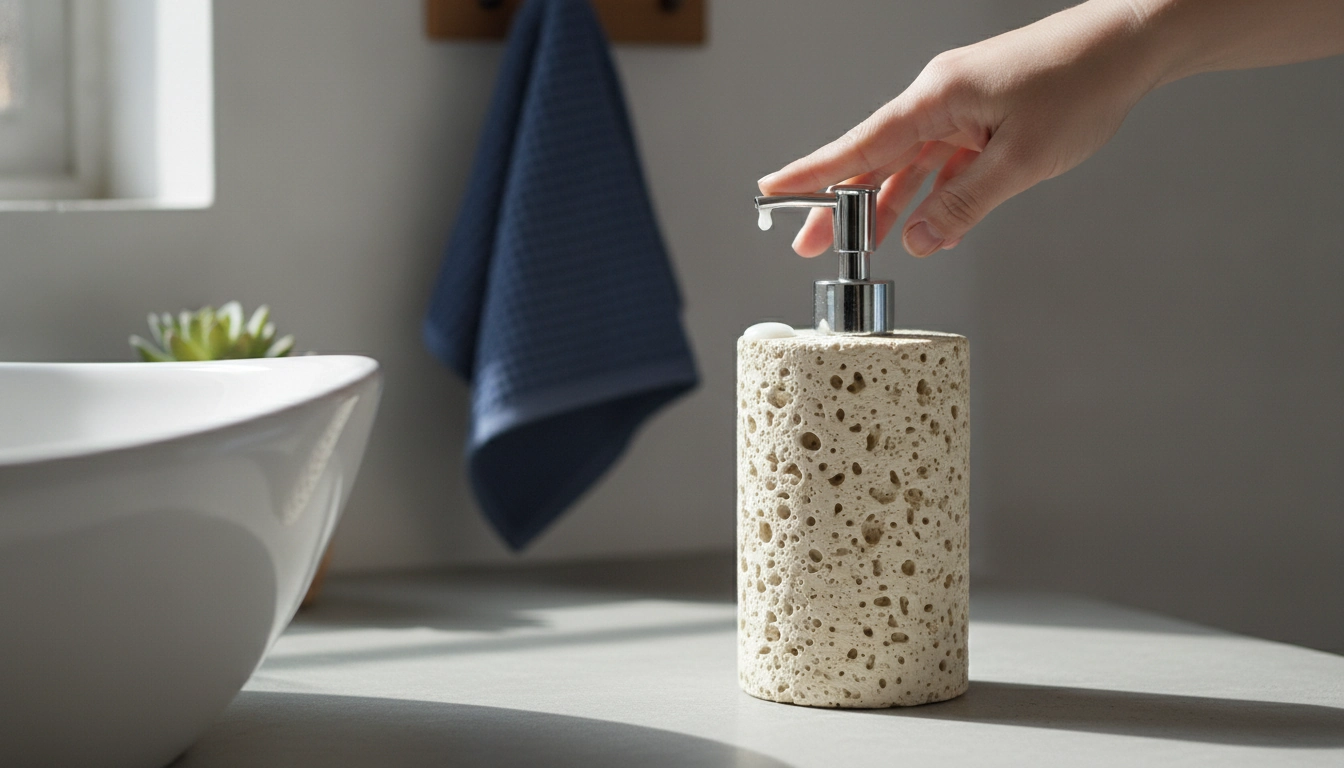
Ceramic foam is a lightweight, sponge-like form of ceramic made with a network of tiny, connected pores. Instead of being solid and dense like a tile or mug, it’s engineered to have an open-cell structure that can hold and move air, water, or other fluids through its passages while still keeping the heat resistance and durability ceramics are known for.
The “foam” part refers to the structure, not a soft texture. Ceramic foam is rigid, but it behaves like a filter because its pores can be made larger or smaller depending on the job. Manufacturers typically create it by mixing ceramic materials with a foaming agent or a sacrificial template; after firing, the template burns out, leaving behind the porous skeleton.
Ceramic foam is widely used in filtration, thermal insulation, and flow control. In industry, it can filter molten metal, trap particles in hot exhaust streams, and support catalytic reactions because it offers lots of surface area in a heat-stable form. It’s also used in specialty applications where plastics or metals would deform, corrode, or fail at high temperatures.
Foaming soap dispensers create foam by mixing liquid soap with air and pushing it through a fine mesh or foaming mechanism. While the soap foam itself isn’t “ceramic foam,” many people encounter the term while shopping for ceramic soap dispensers or learning how foaming pumps work.
For a practical guide to a refillable geometric ceramic foaming soap dispenser, visit https://vividhitspot.shop/guide-geometric-ceramic-foaming-soap-dispenser-refillable/.
For Ceramic Foam Explained: Structure, Uses, and Soap Pumps, the best answer depends on fit, material, care instructions, and how the product will be used day to day.
They combine liquid soap with air inside the pump and force the mixture through a fine screen, turning it into a light foam. Using a soap-and-water mixture helps the pump foam smoothly and reduces clogs.









Leave a comment