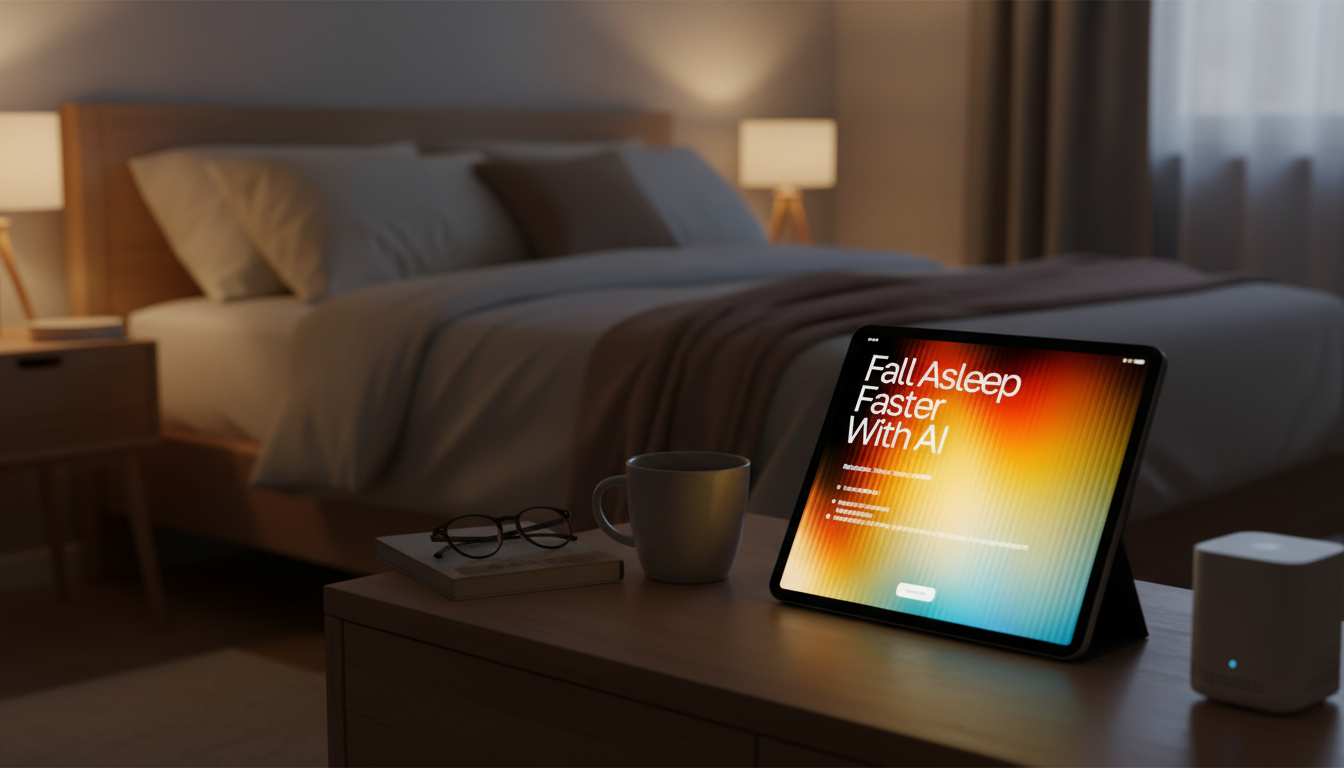
When the mind is busy and bedtime feels unpredictable, a simple, repeatable routine can make a noticeable difference. A digital checklist guided by AI turns scattered sleep tips into a step-by-step wind-down plan that’s easy to follow, adjust, and stick with—night after night.
Falling asleep isn’t only about being tired. Many people end the day in a “wired but tired” state—exhausted, yet mentally activated. Stress, late-day stimulation, irregular schedules, and inconsistent wind-down cues can keep the nervous system on high alert even when your body wants rest.
Evening light exposure plays a bigger role than most expect. Bright overhead lighting and screen glow can delay natural sleepiness by telling your brain it’s still “daytime.” Add in caffeine timing, late heavy meals, alcohol, or a vigorous late workout, and sleep onset can quietly drift later and later.
Another common culprit is unfinished mental business. Racing thoughts and open-ended to-do lists keep the brain in planning mode—rehearsing tomorrow instead of settling into sleep. A checklist approach reduces decision fatigue by making the next step obvious, so you’re not negotiating with yourself at every stage of the night.
General sleep advice is everywhere, but it often fails at the moment you need it most—when you’re tired, overstimulated, and unsure what to do next. An AI-guided checklist translates broad tips into a personalized sequence: the same actions, in the same order, inside the same time window. That consistency becomes a cue your brain learns to recognize.
It also helps identify which levers matter most for you—light, temperature, timing, food, worry loops, or overstimulation—so effort goes where it counts. Instead of rebuilding a routine from scratch after a rough night, you make quick adjustments (one variable at a time) and keep the backbone intact. Over time, this creates a practical routine you can complete even on stressful days.
| What’s getting in the way | How it shows up at bedtime | Checklist step to try tonight |
|---|---|---|
| Late light and screens | Not sleepy until very late; frequent scrolling | Dim lights 60 minutes before bed; switch to low-brightness, warm settings; set a device cutoff |
| Racing thoughts | Mind jumps to tomorrow’s tasks | 3-minute brain-dump list + a single “first task” for tomorrow |
| Temperature or comfort | Restless, flipping pillow/blanket | Cool the room; adjust bedding; quick comfort check (noise, pillow height, dryness) |
| Caffeine timing | Tired but can’t drop off | Move last caffeine earlier; substitute herbal tea or decaf after a set time |
| Irregular schedule | Bedtime changes widely day to day | Anchor a consistent wake time; set a gentle wind-down start time |
A reliable wind-down doesn’t need to be long. It needs to be clear. Start by setting an “official end of day” moment—a consistent time when planning and problem-solving pause. This can be as small as closing your laptop, putting tomorrow’s top task on paper, and saying, “Done for today.”
Next, create a short pre-sleep transition (10–20 minutes). Keep it simple: hygiene, dim light, and one calming activity (light reading, a warm shower, a gentle stretch). When it comes to relaxation, pick one technique per night—not five. A short breathing sequence, progressive muscle relaxation, or a quick body scan can be enough when practiced consistently.
Fall Asleep Faster with AI digital checklist is built to guide a calmer wind-down and smoother sleep onset with a structured, repeatable format. It includes prompts to identify personal triggers (stress, late stimulation, light, caffeine timing, or routine gaps) and step-by-step actions for evenings that feel busy, anxious, or unpredictable.
| Detail | Value |
|---|---|
| Format | Digital checklist |
| Best for | People who want a simple, repeatable wind-down plan |
| Focus | Restful nights and calmer mornings through routine and personalization |
| Price | $5.99 |
| Availability | In stock |
For a cozy wind-down cue, consider adding a simple comfort signal to your routine—like a soft item you only use at night. If that sounds helpful, Ultra-Soft Kawaii Bunny Plush for a cozy wind-down can be an easy, screen-free way to make bedtime feel more inviting.
For additional guidance on sleep routines and healthy sleep habits, these reputable sources are worth bookmarking: National Heart, Lung, and Blood Institute (NHLBI) — Healthy Sleep, American Academy of Sleep Medicine — Sleep Education, and Sleep Foundation — Sleep Hygiene.
Some people notice changes within a few nights, but consistency over 1–2 weeks tends to matter most. Focus on one change at a time—like evening light, a steadier schedule, or a quick worry routine—so you can tell what’s actually helping.
Use a low-stimulation reset such as quiet reading in dim light, slow breathing, or a short body scan, and avoid clock-checking. If trouble falling asleep persists for weeks or significantly affects daytime functioning, consider speaking with a healthcare professional or a sleep specialist.
Yes—anchors make it workable. Keep a consistent wake time when possible, use a clear “wind-down start” cue, and rely on a short minimum routine you can complete in 5–10 minutes on chaotic nights.












Leave a comment