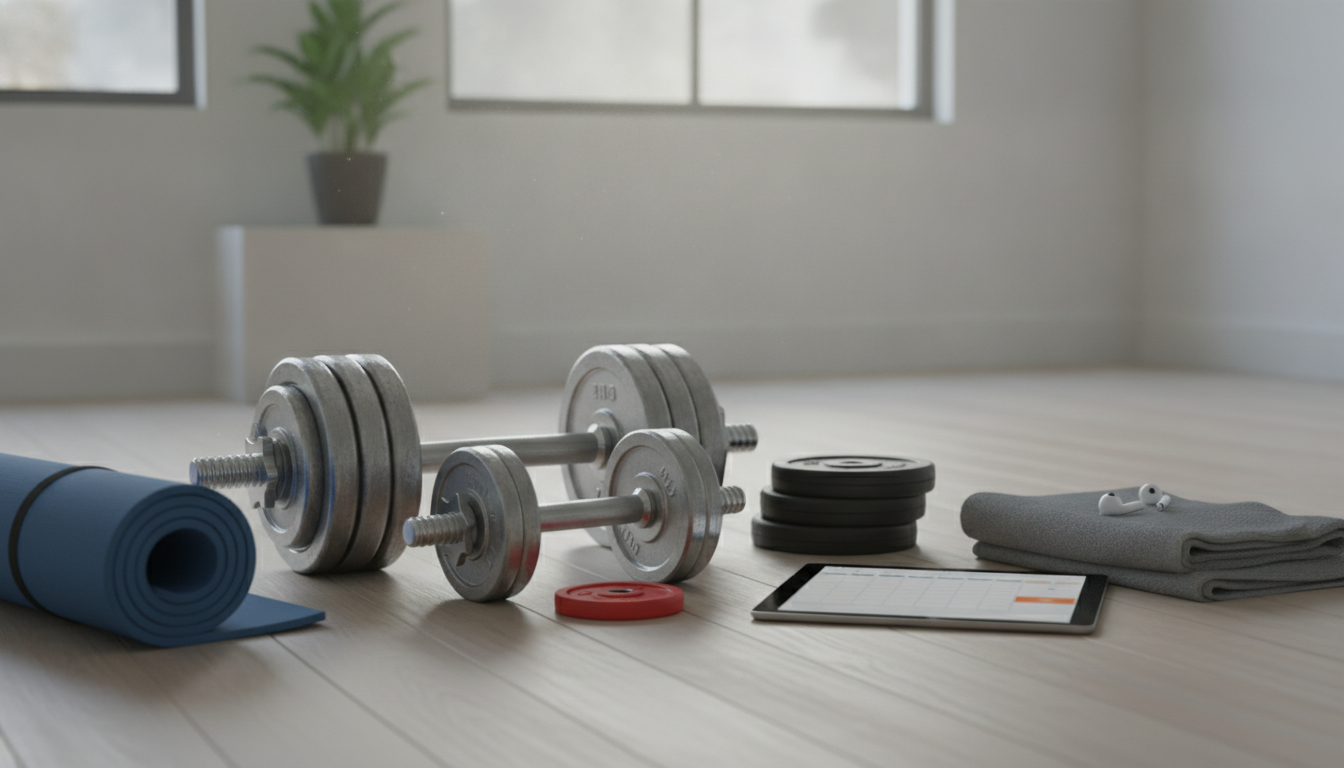
A weekly routine works best when it matches real life: limited time, fluctuating energy, and the need for clear progression. A dependable blueprint removes daily guesswork by organizing training into repeatable days, balancing strength and recovery, and using simple rules to adjust volume so consistency becomes the default rather than a constant restart.
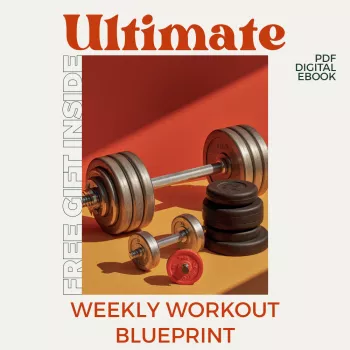
If you want a plug-and-play layout with a “what to do today” structure, The Ultimate Weekly Workout Blueprint eBook keeps the week organized while still leaving room for real-world changes like travel, stress, or short workout windows.
For general health, the Physical Activity Guidelines for Americans recommend a mix of aerobic activity and muscle-strengthening work across the week—exactly what a well-built schedule helps you execute consistently.
Start by choosing a training frequency you can repeat for months. More days only helps if it’s stable on your calendar.
Anchor the week with 2–3 strength sessions, add 1–2 brief conditioning blocks, and protect at least one true recovery day (easy walk, mobility, light cardio). Keep each session predictable: warm-up → main lift → accessories → optional finisher.
| Option | Mon | Tue | Wed | Thu | Fri | Sat | Sun |
|---|---|---|---|---|---|---|---|
| 3-Day Strength | Strength A | Walk/Mobility | Strength B | Rest | Strength C | Optional Easy Cardio | Rest |
| 4-Day Upper/Lower | Upper | Lower | Rest/Zone 2 | Upper | Lower | Walk/Mobility | Rest |
| 5-Day Mix | Strength A | Conditioning | Strength B | Walk/Mobility | Strength C | Conditioning | Rest |
Raise body temperature, mobilize the joints you’ll use, then do 2–3 ramp-up sets for your first lift. This is where you “buy” better reps later.
Pick one big pattern—squat, hinge, press, or pull—then do 3–5 sets of 3–8 reps. Leave 1–3 reps in reserve most weeks so progress doesn’t come with constant burnout.
Choose a complementary movement (hinge after squat, row after press) for 3–4 sets of 6–10 reps. This builds muscle and reinforces balance.
Use 2–4 movements that address weak points: core stability, glutes, upper back, and single-leg work are common high-return picks.
Only add this when energy is high: carries, sled pushes, bike intervals, or a short circuit. The goal is conditioning without stealing recovery from tomorrow.
Write down load used, reps achieved, and a quick “how hard it felt.” That note becomes next week’s roadmap.
For a science-backed overview of progression in resistance training, see the ACSM Position Stand on progression models.
If home workouts are getting interrupted, giving yourself a quieter window can help—some people keep a small “distraction swap” for pets nearby, like the Interactive Treat Dispensing Tumbler Toy for Dogs and Cats, so training time stays training time.
For a simple refresher on why movement boosts day-to-day health and energy, the CDC’s overview of physical activity benefits is a useful reference.
The easiest plan to follow is the one that tells you exactly what today is. The Ultimate Weekly Workout Blueprint eBook is built around that principle: repeatable days, clear progression, and built-in options for when your schedule changes.
If you’re refreshing your gym basics for consistency (especially if you train early and go straight to work), a durable everyday accessory like the Men’s Classic Genuine Cowhide Leather Belt with Solid Brass Buckle – 1.5 Inch Wide can be a small “friction reducer” that keeps the day moving after you finish your session.
Most people do best with 3–5 days per week, based on schedule reliability and recovery. Choose the option you can repeat for months, then progress gradually instead of constantly changing plans.
For most people, 35–60 minutes is plenty for strength and steady progress. On busy days, a 30-minute session with a warm-up, one main lift, and one accessory can maintain momentum.
A deload commonly fits every 4–8 weeks, or sooner if you hit a plateau, soreness keeps rising, sleep is poor, or normal weights feel unusually hard. Reduce load and/or sets for a week, then resume building.












Leave a comment