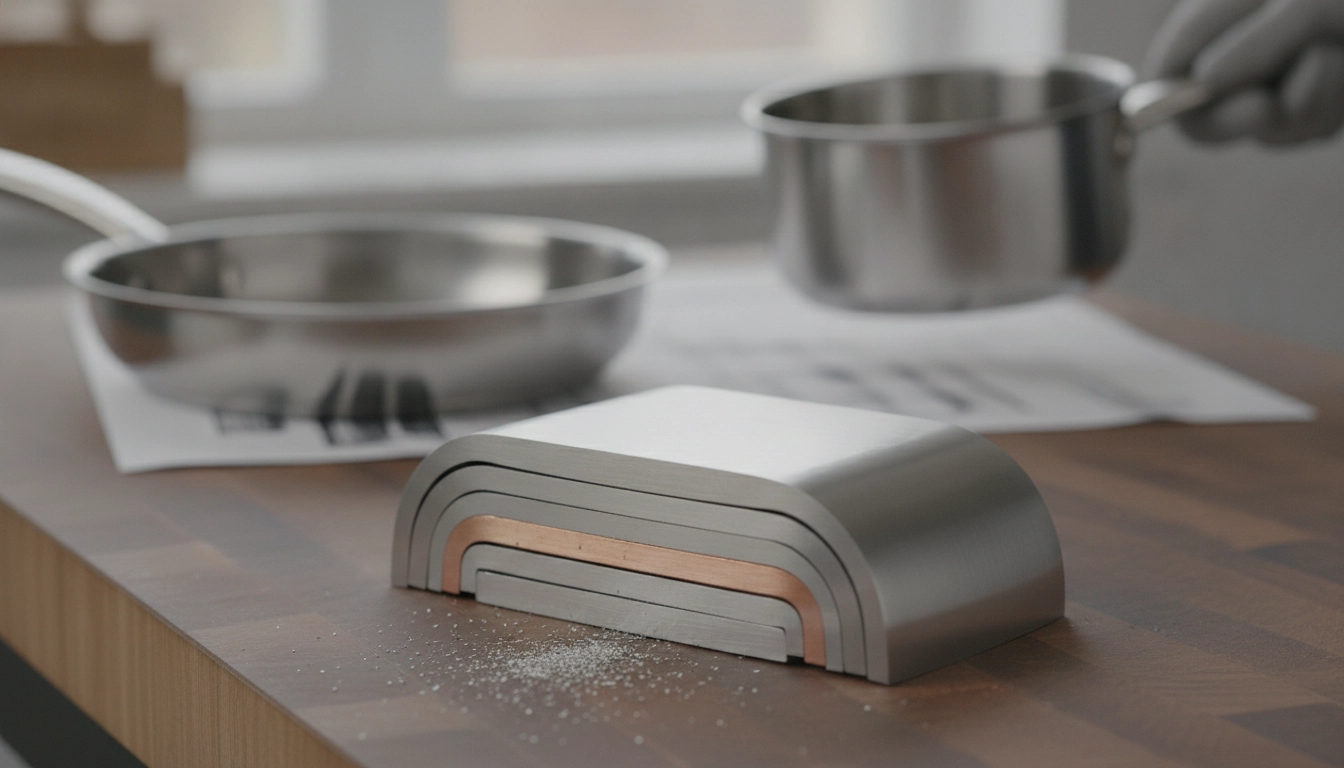
Multi-ply stainless steel is cookware material built by bonding multiple thin layers (“plies”) of different metals into a single sheet, then forming that sheet into pans and pots. The most common construction places stainless steel on the cooking surface and exterior for durability and easy cleaning, while a heat-conductive core—usually aluminum, sometimes copper—sits in the middle to spread heat quickly and evenly.
Stainless steel is tough and non-reactive, but it doesn’t conduct heat as evenly as aluminum or copper. By layering metals, multi-ply cookware combines the strengths of each: stainless for a stable, corrosion-resistant surface and an inner core to reduce hot spots and improve responsiveness when heat is turned up or down.
You’ll often see 3-ply and 5-ply. In 3-ply, the structure is typically stainless/aluminum/stainless. In 5-ply, there may be multiple aluminum layers or a mix of aluminum and stainless layers to fine-tune heat flow and stiffness. More plies don’t automatically mean better performance; the thickness and type of the core metal matter just as much.
Multi-ply stainless steel is valued for more even browning, steadier simmering, and fewer scorched areas—especially helpful for sauces, sautéing, and searing. Many multi-ply lines are also oven-safe and compatible with induction (as long as the exterior layer is magnetic stainless).
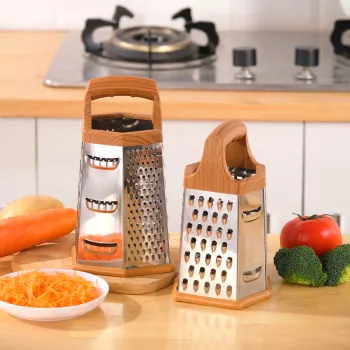
For more guidance on choosing well-built stainless tools for everyday cooking, see the main guide here: https://vividhitspot.shop/guide-stainless-4-sided-box-grater-wood-style-handle/.
For Multi-Ply Stainless Steel Explained: 3-Ply vs 5-Ply, the best answer depends on fit, material, care instructions, and how the product will be used day to day.
Multi-ply cookware spreads heat up the sides as well as across the base, which can help with sautéing and sauces. Disc-bottom pans can still perform well, but heat is concentrated mostly on the bottom where the disc sits.










Leave a comment